



采矿用钢丝铠装交联聚乙烯电缆
适用范围:额定电压不超过450/750V(含)的控制、信号、保护或测量系统连接线。.
分享:
Specifications
关于
Structure
Features
Selection
应用
Tech Data
Comparison
FAQ
Tips
Logistics
联系方式
Specifications
Technical Specifications & Performance
- Model / Series
- Voltage Rating
- Conductor Material
- Conductor Class
- Cross Section
- Number of Cores
- MYJV32 / SWA Mining Cable
- 0.6/1kV
- Copper
- Class 2 Stranded
- 10–400 mm²
- Array
- Insulation
- Sheath
- Armoring
- MOQ
- Max. Conductor Temp.
- Min. Bending Radius
- XLPE
- PVC
- Steel Wire Armored
- ≥ 100 m
- 90°C
- 15 × Cable Outer Diameter
About This Product
Built for Vertical Shafts and Inclined Drifts in Underground Mines
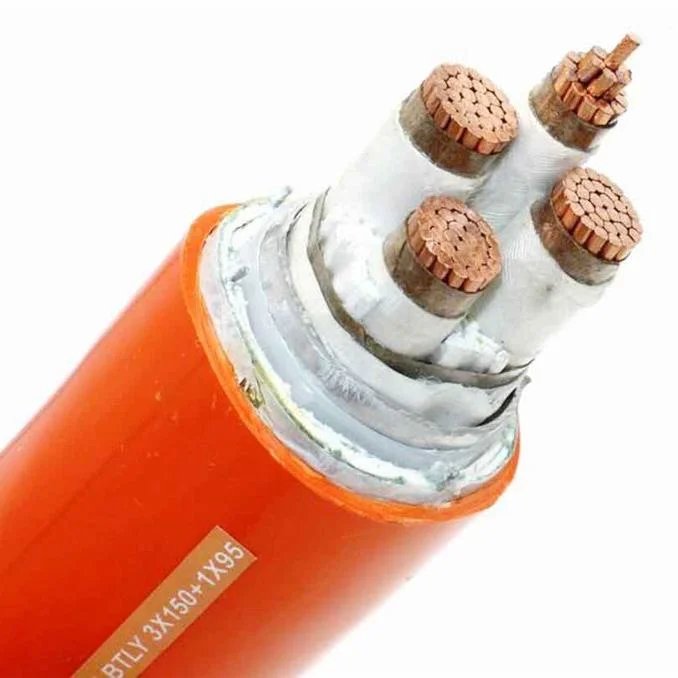
Mining Steel Wire Armored XLPE Cable (model designation MYJV32 for single-layer round wire armor, MYJV42 for double-layer round wire armor) is a fixed-installation power cable designed for the load-bearing sections of coal and metal mines — primarily vertical shafts, steeply inclined drifts, and long main haulage roads where the cable’s own weight, plus the constant low-frequency vibration of mining operations, would tear a steel-tape-armored cable apart. The round-wire armor takes longitudinal tensile load along the cable axis, which steel-tape armor cannot. This is the difference that makes MYJV32 the standard specification for shaft drops over 80 m.
Production follows MT 818 (the Chinese coal mine cable standard, classification 1-2 for mine-use power cable rated up to 8.7/15 kV) in combination with GB/T 12706 for the underlying XLPE insulation construction. The cable is suitable for fixed wiring inside mines but is not a flame-retardant explosion-proof cable on its own — for gassy coal mines below ground, the buyer typically pairs it with flameproof junction boxes and switchgear, or specifies the flame-retardant variant MYJV32-ZR (passing GB/T 19666 / IEC 60332-3 Category A) at quotation stage.
Jinda manufactures MYJV32 and MYJV42 at our Liaoning base, which operates a dedicated armor line for galvanized round steel wire of 1.25 mm, 1.6 mm, 2.0 mm, 2.5 mm, and 3.15 mm diameters depending on cable OD. Standard lead time is 20 to 30 days for voltages up to 8.7/15 kV; samples of routine factory test reports from prior shipments are available with every quotation.
Cable Structure
Six Layers, Engineered Around One Job: Carrying Tensile Load
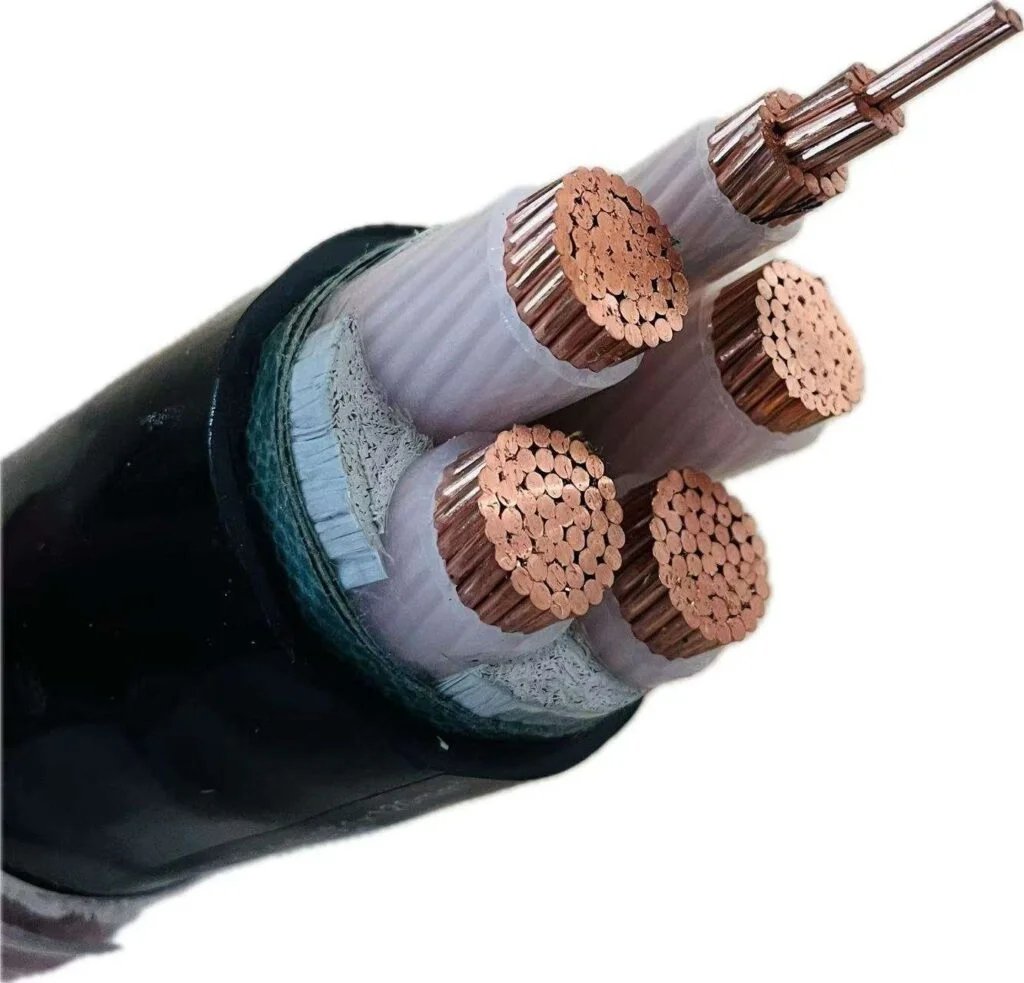
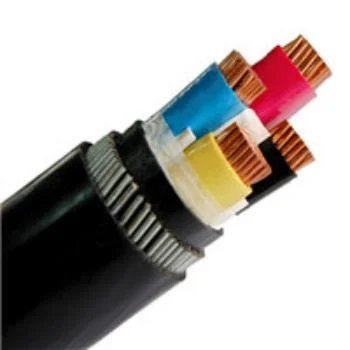
The construction is identical to a standard XLPE power cable up to the inner sheath. From there, the round galvanized steel wire armor is what separates MYJV32 from the much more common MYJV22 (steel tape) and from the rest of the YJV family.
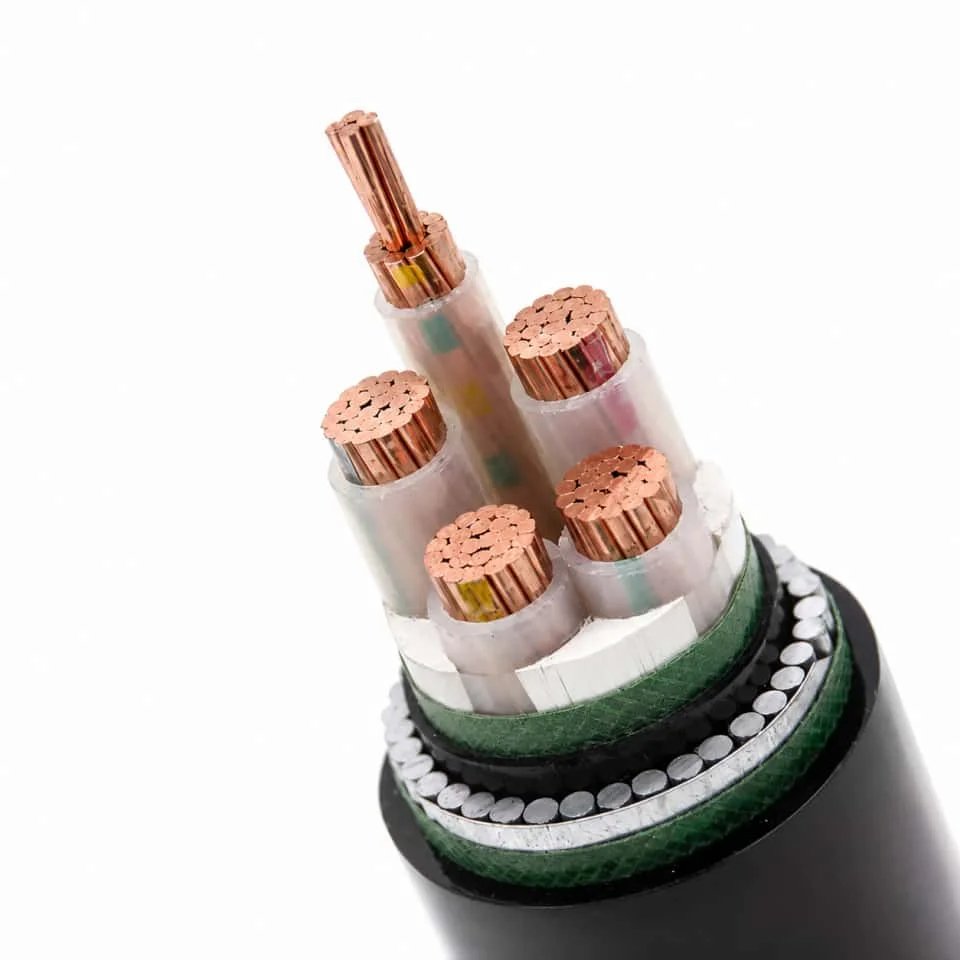
Conductor — Stranded Bare Copper (Class 2)
Compact-stranded bare annealed copper conductor per IEC 60228 Class 2. Aluminum is offered on request for cross-sections of 25 mm² and above, with model designation changing to MLYJV32.
Insulation — Cross-Linked Polyethylene (XLPE)
Dry-cured XLPE insulation, conductor operating temperature 90°C continuous, 250°C short-circuit. For 6/10 kV and above, semi-conducting layers are extruded over the conductor and outside the insulation in a triple-extrusion process.
Filler & Binding Tape
Filler & Binding Tape Non-hygroscopic PP filler fills the interstices to produce a circular cross-section. A non-woven binding tape holds the cabled cores in place before the inner sheath is extruded.
Inner Sheath (Bedding) — PVC
Extruded PVC inner sheath cushions the insulation from the steel wire armor and prevents the wires from cutting into the cores when the cable is bent or hangs under tension.Armor — Galvanized Round Steel Wire
A single helical layer of galvanized round steel wires (1.25 to 3.15 mm diameter, scaled to cable OD per GB/T 12706-3 Table 11). This is the load-bearing layer — it carries longitudinal tensile force when the cable is suspended vertically, and it provides the mechanical protection that mining environments demand. MYJV42 adds a second counter-helical layer for cable runs over 300 m vertical drop.
Key Features
What Round Wire Armor Buys You Underground
Every feature below is a direct answer to a failure mode that mining engineers see in the field. Compared to the cheaper steel-tape MYJV22, the steel wire MYJV32 trades cost for tensile strength and impact resistance — the right trade for vertical shafts and high-vibration zones.
Axial Tensile Load Capacity
Galvanized round steel wires laid helically along the cable carry longitudinal pulling force. This is what lets the cable be suspended down a 200 m vertical shaft without the conductors stretching or the joints failing — a job steel-tape armor (MYJV22) simply cannot do.
Impact and Crush Resistance
Round-wire armor has more steel cross-section per unit length than tape armor of comparable cable OD. In mine roadways where falling rock and roof-bolt strikes are routine, this translates to a higher mechanical safety margin before the insulation is compromised.
XLPE Insulation, 90°C Continuous
XLPE rated 90°C continuous / 250°C short-circuit gives roughly 15 to 20 percent more ampacity than PVC-insulated mine cable (MYV / MYV22) at the same cross-section — useful for the long supply runs typical of deep mines.
Full Voltage Range, 0.6/1 kV to 8.7/15 kV
One product family covers the LV distribution circuits at the working face, the MV feeders down the shaft, and the substation-to-shaft incoming supply. Cores from 1 to 5; cross-sections 1.5 to 400 mm².
Flame-Retardant and LSZH Variants Available
MYJV32-ZR adds flame-retardant compounding to pass GB/T 19666 / IEC 60332-3 Category A. MYJV32-WDZ uses an LSZH outer sheath for confined spaces where smoke density and acid-gas emission matter. Both are quoted alongside the standard product.
Compliant with MT 818 (Chinese Mine Cable Std.)
Manufactured to MT 818-2017 Part 1 and Part 2, which is the regulatory standard for Chinese coal mines and is widely accepted by mining operators across Southeast Asia, Central Asia, and Africa. Equivalent IEC 60502-1 / IEC 60502-2 type test reports are available on request.
How to Choose
Six Decisions Before You Place the Order
Mining cable selection is not just about ampacity. The wrong armor choice will fail mechanically before it fails electrically. Walk through these six decisions with your designer before issuing the PO.
Confirm the voltage class
Match the system voltage U₀ / U to one of the standard grades: 0.6/1 kV for LV distribution, 3.6/6 kV or 6/10 kV for mine MV feeders, 8.7/15 kV for deep mine main supply. For unearthed or impedance-earthed mine networks (common in MV), specify the higher grade to allow for sustained earth-fault voltage rise.
Decide tape vs round wire armor
Round-wire armor has more steel cross-section per unit length than tape armor of comparable cable OD. In mine roadways where falling rock and roof-bolt strikes are routine, this translates to a higher mechanical safety margin before the insulation is compromised.
Size the cross-section
Pick the cross-section that satisfies both ampacity (under your installation method) and voltage drop (typically ≤ 5 percent end-to-end for mine loads). For long shaft drops, voltage drop usually decides. Always cross-check against the short-circuit thermal stress: at 8.7/15 kV with a 25 kA fault, conductors below 70 mm² will be undersized.
Choose the number of cores
One product family covers the LV distribution circuits at the working face, the MV feeders down the shaft, and the substation-to-shaft incoming supply. Cores from 1 to 5; cross-sections 1.5 to 400 mm².
Specify flame-retardant or LSZH if needed
Standard MYJV32 is not flame-retardant by default. If your mine safety regulations require IEC 60332-3 Category A bunched-cable performance, specify MYJV32-ZR. If smoke density and corrosive gas emissions are regulated (typical for confined manned spaces), specify MYJV32-WDZ with LSZH outer sheath.
Confirm drum length per run
Underground joints are expensive and reliability-critical — aim to deliver each run as a single drum. Tell us the shaft depth or roadway length when ordering and we will spool drums to your exact run length rather than the standard 500 m / 1,000 m. Specials up to 2,000 m on a single drum are possible for smaller cross-sections.
应用
Where MYJV32 / MYJV42 Earns Its Cost Premium
Round-wire armor is overkill for horizontal roadway runs — on flat ground the buyer should specify MYJV22 (steel tape) and save 20 to 30 percent on material cost. The four applications below are where steel wire armor is the right answer, not an upgrade.
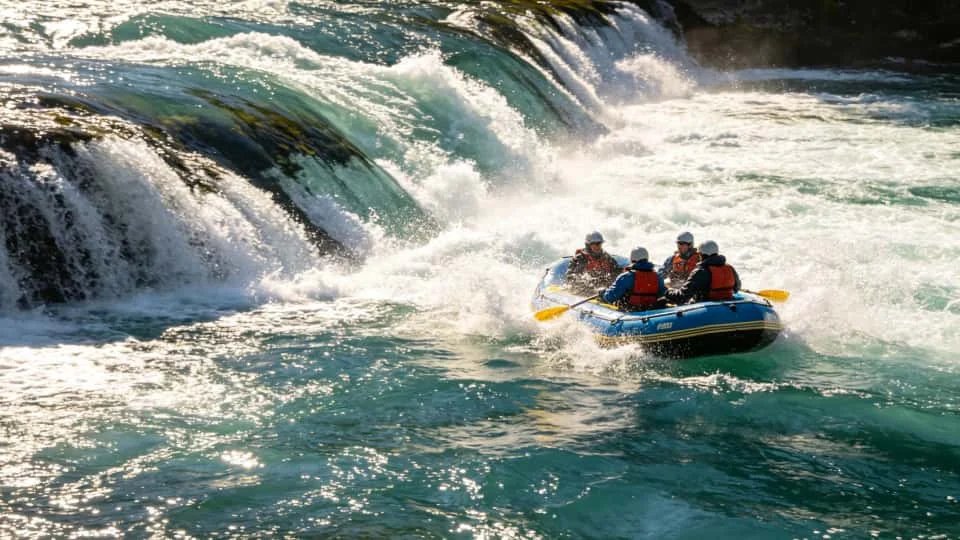
Vertical Shaft Power Supply
Main shaft drops of 100 to 800 m delivering 6/10 kV or 8.7/15 kV power from the surface substation to the underground MV distribution. Round wire takes the cable’s own suspended weight.
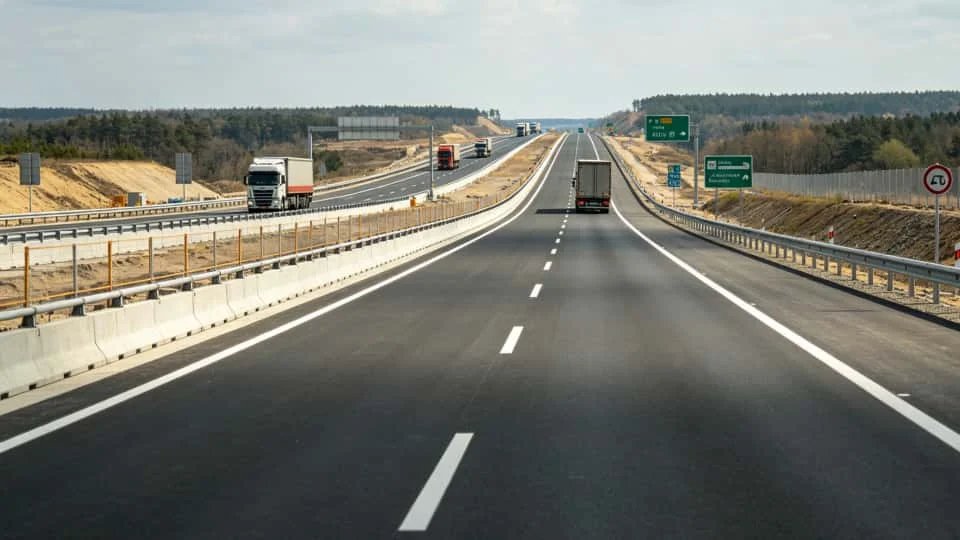
Steep Inclined Drifts
Decline ramps and inclined haulage drifts at gradients above 30°, where the cable develops significant axial component force from its own weight. MYJV32 is also the default for cross-shaft connecting drifts in multi-level mines.
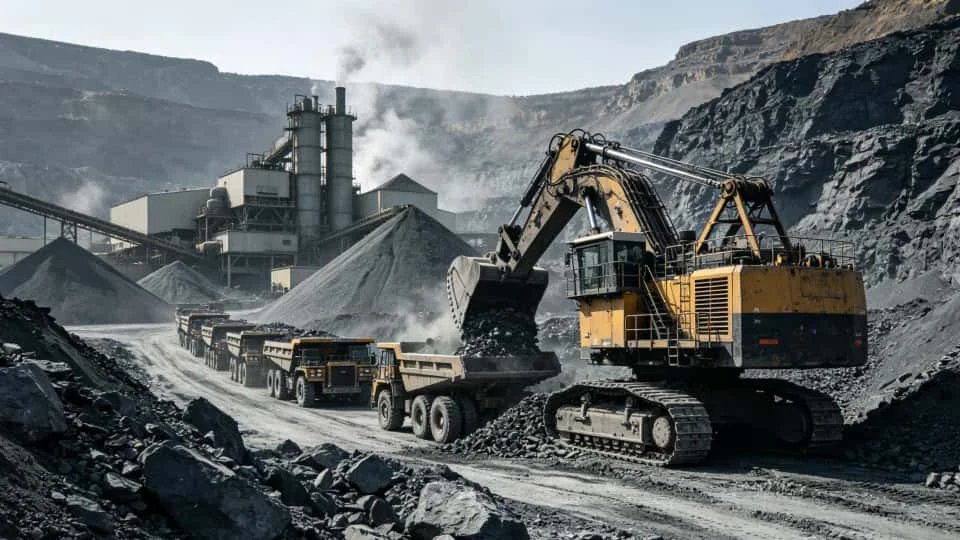
Main Haulage Roads & Ventilation Shafts
Long horizontal trunk feeders subject to roof-bolt strike risk, falling rock, or heavy mechanical traffic. The round-wire armor’s impact resistance is the tradeoff worth paying for in high-risk zones.
Metal Mines, Quarries, Tunnels
Iron, copper, gold, lead-zinc mining, plus large tunneling projects. Same mechanical demands as coal mines minus the methane gas constraint — standard MYJV32 (non-flame-retardant) is widely deployed here.
Not suitable for: Mobile machinery (use MCP or MYP rubber-sheathed mining trailing cable instead — MYJV32 is a fixed-installation cable and will fail under repeated flexing). Also not suitable as a standalone solution in Category I gassy coal mines where flameproof certification is required — specify MYJV32-ZR and pair with flameproof switchgear.
Technical Data
DC Resistance & Ampacity (3-Core 0.6/1 kV, Copper)
Reference values for the most-quoted variant: 3-core copper, 0.6/1 kV class, XLPE insulation. Ampacity is for laid-in-air installation at 30°C ambient, per IEC 60364-5-52. Values for 6/10 kV and above, or installation in conduit / direct burial, are provided with the formal technical quotation.
| Cross Section | DC Resistance (max) | Ampacity (in air, 30°C) | Ampacity (buried, 20°C ground) | Approx. Weight |
|---|---|---|---|---|
| 10 mm² | 1.83 Ω/km | 67 A | 78 A | ~ 750 kg/km |
| 16 mm² | 1.15 Ω/km | 89 A | 102 A | ~ 950 kg/km |
| 25 mm² | 0.727 Ω/km | 118 A | 133 A | ~ 1,260 kg/km |
| 35 mm² | 0.524 Ω/km | 145 A | 162 A | ~ 1,540 kg/km |
| 50 mm² | 0.387 Ω/km | 175 A | 195 A | ~ 1,900 kg/km |
| 70 mm² | 0.268 Ω/km | 220 A | 240 A | ~ 2,500 kg/km |
| 95 mm² | 0.193 Ω/km | 265 A | 288 A | ~ 3,150 kg/km |
| 120 mm² | 0.153 Ω/km | 305 A | 328 A | ~ 3,800 kg/km |
| 150 mm² | 0.124 Ω/km | 350 A | 372 A | ~ 4,560 kg/km |
| 185 mm² | 0.0991 Ω/km | 400 A | 420 A | ~ 5,500 kg/km |
| 240 mm² | 0.0754 Ω/km | 465 A | 485 A | ~ 6,950 kg/km |
| 300 mm² | 0.0601 Ω/km | 530 A | 545 A | ~ 8,500 kg/km |
DC resistance values per IEC 60228 Class 2 stranded copper, 20°C. Ampacity reference per IEC 60364-5-52 Table B.52.4 / Method E (in air, multi-core cable, 30°C ambient) and Method D1 (buried, 20°C ground, thermal resistivity 1.0 K·m/W). Weights include armor and outer sheath for 3-core variant. For aluminum conductors, multiply DC resistance by 1.64 and ampacity by approximately 0.78. Always verify against factory test report before final specification.
Comparison
MYJV32 vs MYJV22 vs MYJV42 — Pick the Right Armor
All three are mining XLPE power cables. The only meaningful difference is the armor, and the armor determines whether the cable survives or fails. Use this table to confirm you have specified the right one.
When to choose MYJV32 (this product)
Vertical or steeply inclined runs from 30 m up to roughly 300 m. High-vibration zones, areas with roof-bolt strike or falling-rock risk. The default specification for mine main shaft power supply in the 100–300 m drop range. Pays for itself the first time it doesn’t need to be replaced after a roof fall.
When to choose an alternative
For flat horizontal main roadway runs, choose MYJV22 and save 25–40 percent on cable cost. For shaft drops over 300 m or zones with extreme mechanical hazard, step up to MYJV42. For mobile machinery (face conveyors, drum shearers, loaders), use a rubber-sheathed trailing cable (MCP, MYP) instead — fixed-installation armored cables will fatigue-fail under repeated flexing.
| Attribute | MYJV22 (steel tape) | MYJV32 (single round wire) | MYJV42 (double round wire) |
|---|---|---|---|
| Armor construction | Two helical steel tapes | Single layer galvanized round wire | Two counter-helical layers round wire |
| Axial tensile strength | Low — tapes resist little pull | High | Very high — designed for deep shafts |
| Impact & crush resistance | Moderate | High | Very high |
| Typical installation | Horizontal trenches, level roadways | Vertical shafts, inclined drifts ≤ 300 m | Deep shafts > 300 m, ultra-heavy zones |
| Cable OD (relative) | 1.00 (baseline) | Approx. 1.08 to 1.12 | Approx. 1.18 to 1.25 |
| Weight (relative) | 1.00 (baseline) | Approx. 1.20 to 1.35 | Approx. 1.45 to 1.70 |
| Cost (relative) | 1.00 (baseline) | Approx. 1.25 to 1.40 | Approx. 1.55 to 1.85 |
| Suitable for shaft drop | Not recommended above 30 m | Up to 300 m | 300 m and beyond |
Frequently Asked Questions
Installation & Handling Tips
Six Field Practices That Avoid Premature Failure
The cable is engineered for the underground environment, but the installation crew can still defeat it. The six items below are the most common installation mistakes we see across the mining customer base — each one is preventable with the right procedure.
1
Use proper cable hangers in vertical shafts
Install dedicated mine cable hangers (wedge-type or strap-type) every 6–8 m on the shaft wall. The hangers transfer the cable’s suspended weight to the wall rather than to a single termination point. Skipping this is the most common cause of premature cable failure in shafts.
2
Respect minimum bending radius during pulling
Use rollers and pulling sheaves sized to at least the installation bending radius (15 × OD for MV armored). A single sharp bend during cable pull, even briefly, can crush XLPE insulation against the armor and cause failure during the first AC withstand test.
3
Seal cable ends immediately
XLPE absorbs moisture if left exposed at cut ends. Reseal with heat-shrink caps within minutes of cutting, and check that the factory end-cap is intact on arrival. Wet insulation will pass first commissioning but degrade fast in service — a hidden but expensive failure mode.
4
Earth the armor at both ends (single-point only for > 6 kV long runs)
For LV and short MV runs, bond the armor to PE at both terminations. For long single-circuit MV runs above 6 kV (e.g. shaft drops over 200 m), evaluate single-point bonding to suppress circulating armor currents that waste energy and heat the cable. Get the bonding scheme into the electrical drawing before installation.
5
Use proper armored cable glands and termination kits
For 6/10 kV and above, use cold-shrink or heat-shrink termination kits matched to the cable voltage class. The kit clamps the armor wires individually to the gland body, transferring the suspended weight load to the switchgear enclosure. Improvised terminations are responsible for the majority of in-service MV cable joint failures.
6
Run a full commissioning test before energization
For MV cable, run insulation resistance (5 kV megger, 1 minute) and AC voltage withstand test per IEC 60502-2 commissioning values. Routine factory test passing is not a substitute for commissioning — mechanical damage during pull or termination only shows up under voltage stress.
Safety note: Underground cable installation in coal mines must be carried out by certified electrical workers under a permit-to-work that accounts for methane gas levels, dust ignition risk, and confined-space hazards. The cable’s mechanical and electrical performance assumes installation per MT/T 1117 (Chinese mine cable installation specification) or your jurisdiction’s equivalent.
Manufacturing Capability
Why Source From sinopower Cable
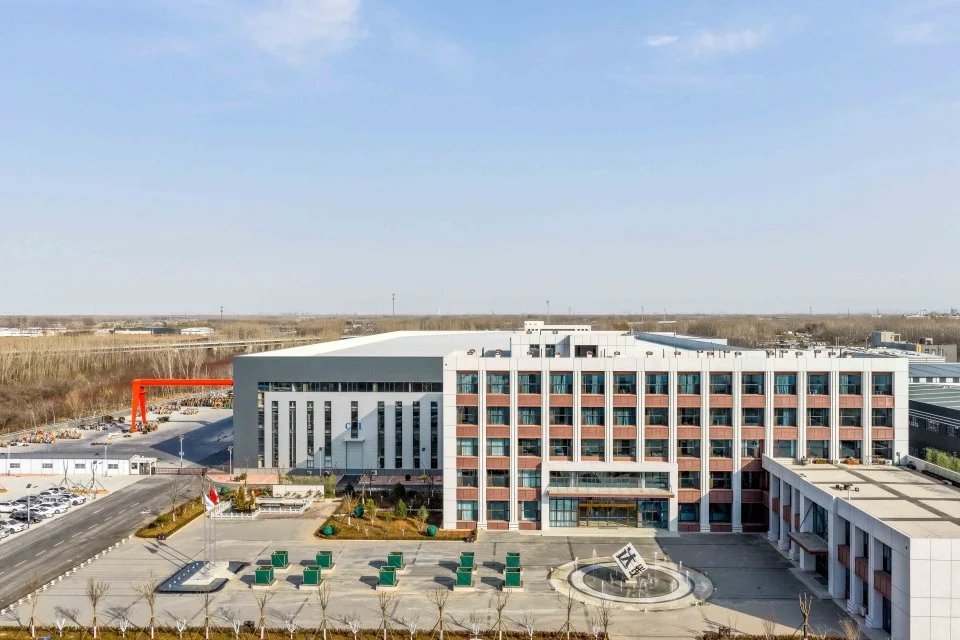
Behind every drum we ship sits a 38-year track record, five production bases under one MES system, and a documentation discipline that gets cables through customs without delays.
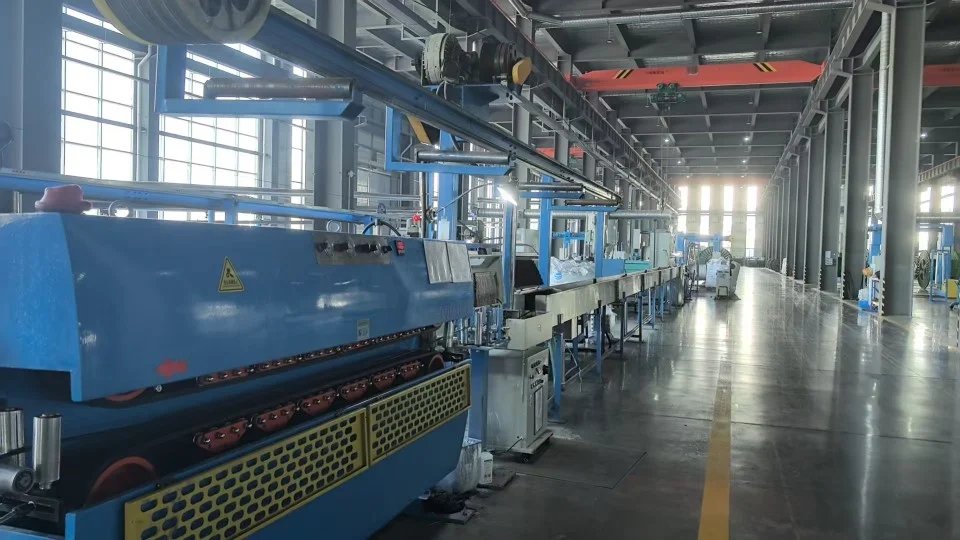
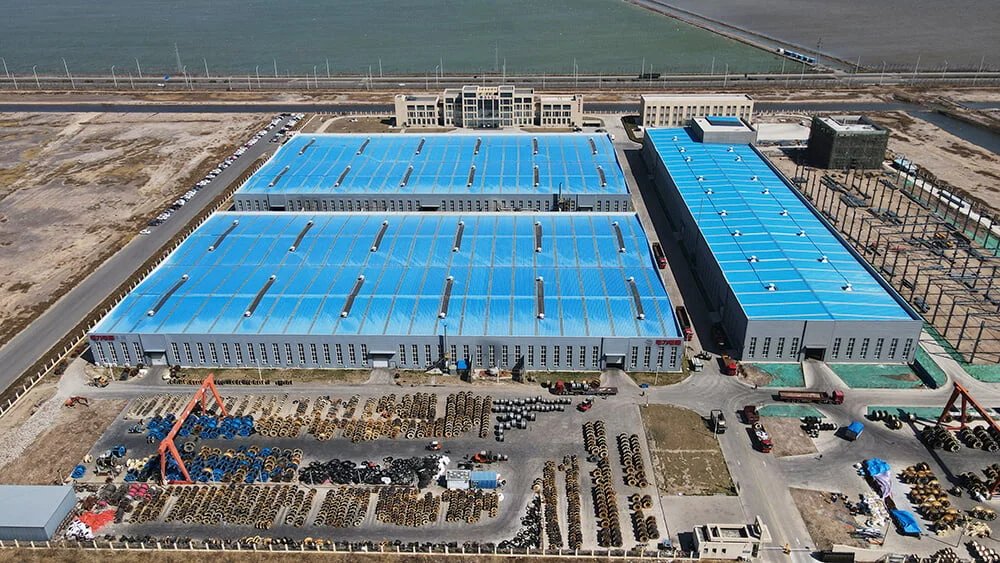
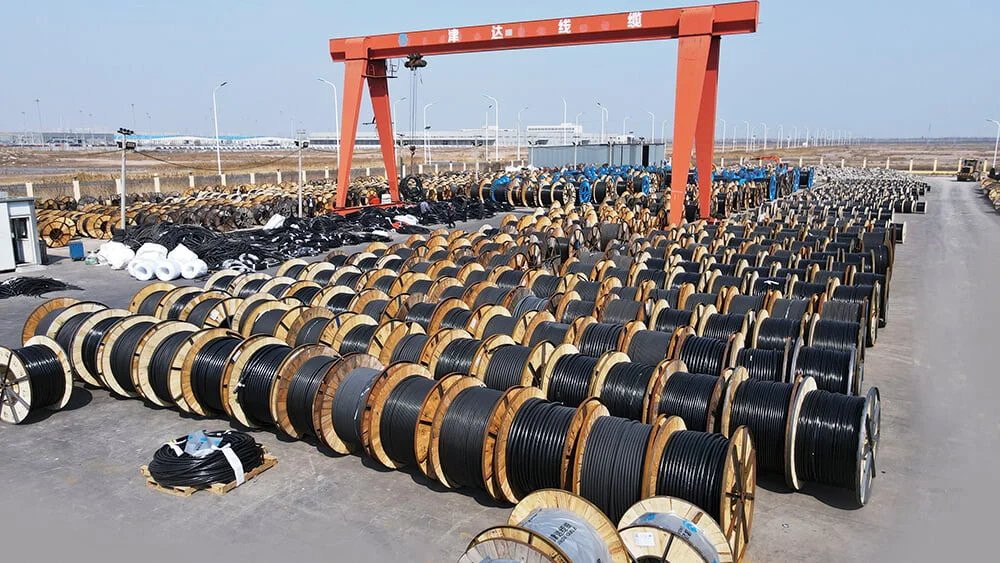
Every cable tested twice before shipping
Since 1987, our two-stage QC has been refined to a science: routine test on the production line, then full electrical and mechanical re-test before packing. Across 50+ export markets, our return rate stays under 0.3%.
Five production bases, 470,000 m², synced via MES
Tianjin, Liaoning, Heilongjiang, Shandong, and Xian — each base runs under one unified MES system. Same recipe, same protocols, same traceability, regardless of which plant ships your order.
3,000+ SKUs, custom configurations welcome
Standard sizes ship from inventory. Special voltage grades, color-coding, drum lengths, or armor configurations are routine — submit your spec and our team will quote the lead time honestly.
Trusted by EPC contractors in 50+ countries
We supply utilities, mining operators, port authorities, and large industrial OEMs across Europe, the Americas, Southeast Asia, the Middle East, and Africa.
Full paperwork shipped with every order
Every shipment includes factory test report, certificate of origin (COO), packing list, and bill of lading (B/L). Customer-nominated witness testing can be arranged before shipment.
Our Track Record
98.7%
On-time shipment rate (last 24 months)
< 0.3%
Return rate across export markets
25 days
Typical sea freight Tianjin → Rotterdam
100%
Shipments with routine test report attached
Logistics & Delivery
Packaging, Shipping & Documentation
What we handle on our side from production floor to the port of loading. Product-specific installation guidance is supplied with the datasheet that accompanies each order.
包装
- Wooden or steel drums per IEC 62004
- Coil packaging available for small cross-sections
- Standard drum lengths plus custom lengths on request
- Each drum labeled with type, voltage, cross-section, length, batch
- Waterproof wrapping for export shipments
- Cable ends sealed against moisture ingress
- Private-label / OEM packaging available under NDA
Shipping
- FCL / LCL sea freight, air freight on request
- Trade terms: EXW, FOB, CFR, CIF, DDP
- Ports of loading: Tianjin / Qingdao / Shanghai
- Typical sea freight to Rotterdam: 25 days
- Lead time confirmed at order acknowledgement
- Container loading photos sent before sailing
Documentation
- Factory routine test report (per applicable standard)
- Commercial invoice and packing list
- Certificate of origin (CO) — China Council, FORM A, FORM E available
- Bill of lading (B/L) — original or telex release
- Third-party inspection by SGS / BV / TÜV on request
- Customer-nominated witness testing arranged before shipment
Get in Touch
Request a Quote for Flexible Mineral Insulated Fire Resistant Cable
- Technical quotation with itemized FOB / CIF pricing
- Sample factory test report from a previous shipment
- Realistic lead time including raw-material procurement
- Direct contact with the assigned sales engineer
电子邮件
info@sinopowercable.com
Response Time
Within 1 business day
Your message has been sent