





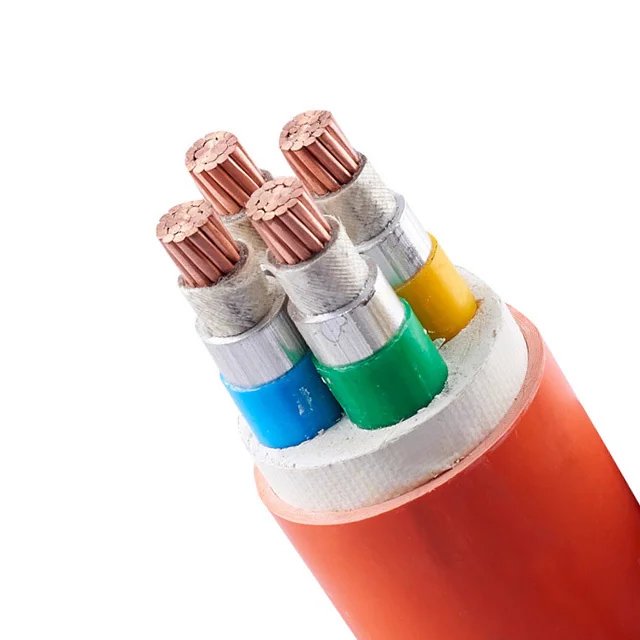
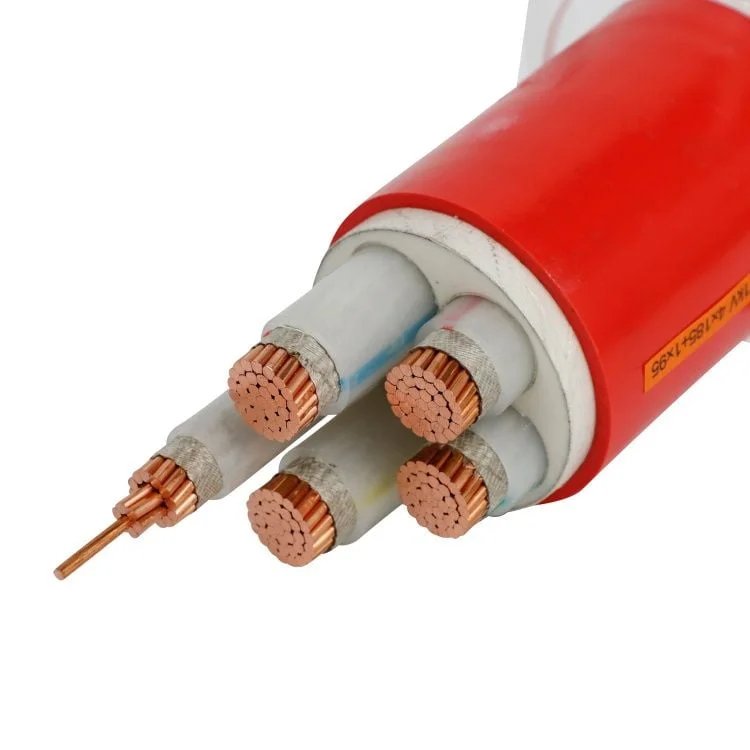
Flexible Mineral Insulated Fire Resistant Cable
التطبيق: كابل مرن مخصص للمناطق الجافة، يُستخدم في الأغراض التي تتطلب مرونة خاصة في ظروف خالية من أي ضغوط ميكانيكية. يسمح بالثني واللف المتكرر. مناسب بشكل خاص للاستخدام في الأجهزة الصغيرة ذات الأحمال الميكانيكية المنخفضة ولتوصيل الأجهزة المنزلية الخفيفة مثل أجهزة المطبخ ومصابيح المكتب ومصابيح السقف والمكانس الكهربائية والأجهزة المكتبية وأجهزة الراديو وغيرها، شريطة أن يتوافق H03VV-F مع المواصفات الأساسية للجهاز.
شارك:
Specifications
نبذة عن
Structure
Features
Selection
التطبيقات
Tech Data
Comparison
FAQ
Tips
Logistics
اتصل بنا
Specifications
Technical Specifications & Performance
- Model / Series
- Voltage Rating
- Conductor Material
- Conductor Class
- Cross Section
- Number of Cores
- BBTRZ / Flexible MI Cable
- 0.6/1kV
- Copper
- Class 2 Stranded
- 1.5–240 mm²
- Array
- Insulation
- Sheath
- Armoring
- MOQ
- Max. Conductor Temp.
- Min. Bending Radius
- PVC
- PVC
- Unarmored
- ≥ 100 m
- 90°C / 120°C
- 6 × Cable Outer Diameter
About This Product
The Cable That Keeps Working While the Building Burns
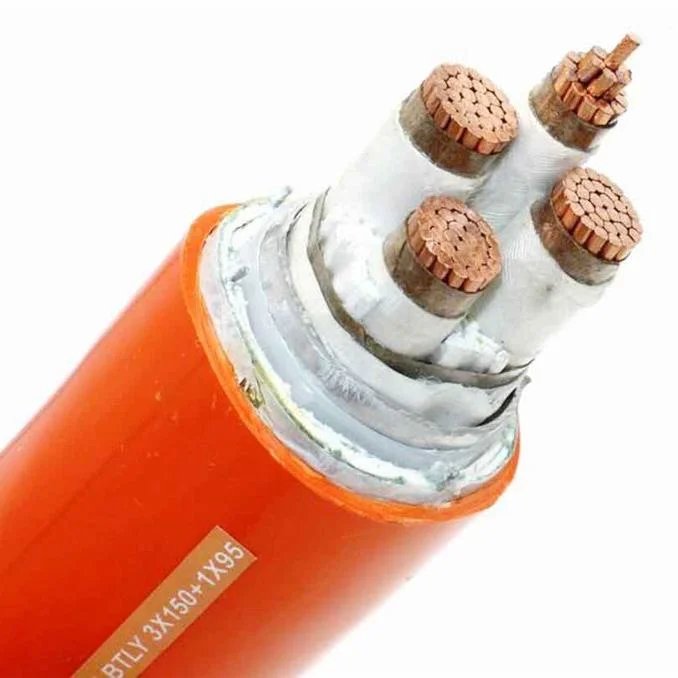
Flexible Mineral Insulated Fire Resistant Cable (model designation BBTRZ for the mainstream mineral-compound variant; BTTRZ for the premium laser-welded copper-sheath variant) is the cable used where fire-survival is non-negotiable: the circuit must maintain power at 950°C for at least 180 minutes while a fire is actively burning around it. Fire pumps, smoke evacuation fans, emergency lighting, fire-service lifts, ICU and operating-room feeders — these are the loads BBTRZ supplies. Unlike conventional fire-resistant cables (WDZN-YJY with mica tape under XLPE) that survive 750°C for 90 minutes, mineral-insulated cable doubles both the temperature ceiling and the survival time.
The cable is the modern flexible evolution of the classic BTTZ rigid mineral-insulated cable (copper conductor in MgO powder inside a drawn copper tube). BTTZ has been the gold standard since the 1930s for fire survival, but its rigid copper tube limits cable lengths to drum-sized pieces, makes it heavy, expensive to install, and prone to moisture absorption at the cut ends. BBTRZ replaces the MgO powder with a mineral compound insulation that retains the fire performance while allowing continuous-length flexible manufacture, normal cable accessories, and dramatically lower installed cost.
Production follows GB/T 19216 (Chinese fire-resistance test) and BS 6387 Category CWZ (the toughest international test combining fire, water spray, and mechanical shock simultaneously). Jinda manufactures the BBTRZ family at our Tianjin and Shandong bases, with dedicated mica-taping and mineral-extrusion lines. Standard lead time is 20 to 30 days for 0.6/1 kV configurations up to 240 mm². The premium BTTRZ variant with laser-welded copper sheath is quoted alongside on request — commonly specified for corrosive environments and where lightning protection requires a continuous metallic earth path.
Cable Structure
Five Layers That Stay Functional at 950 Degrees
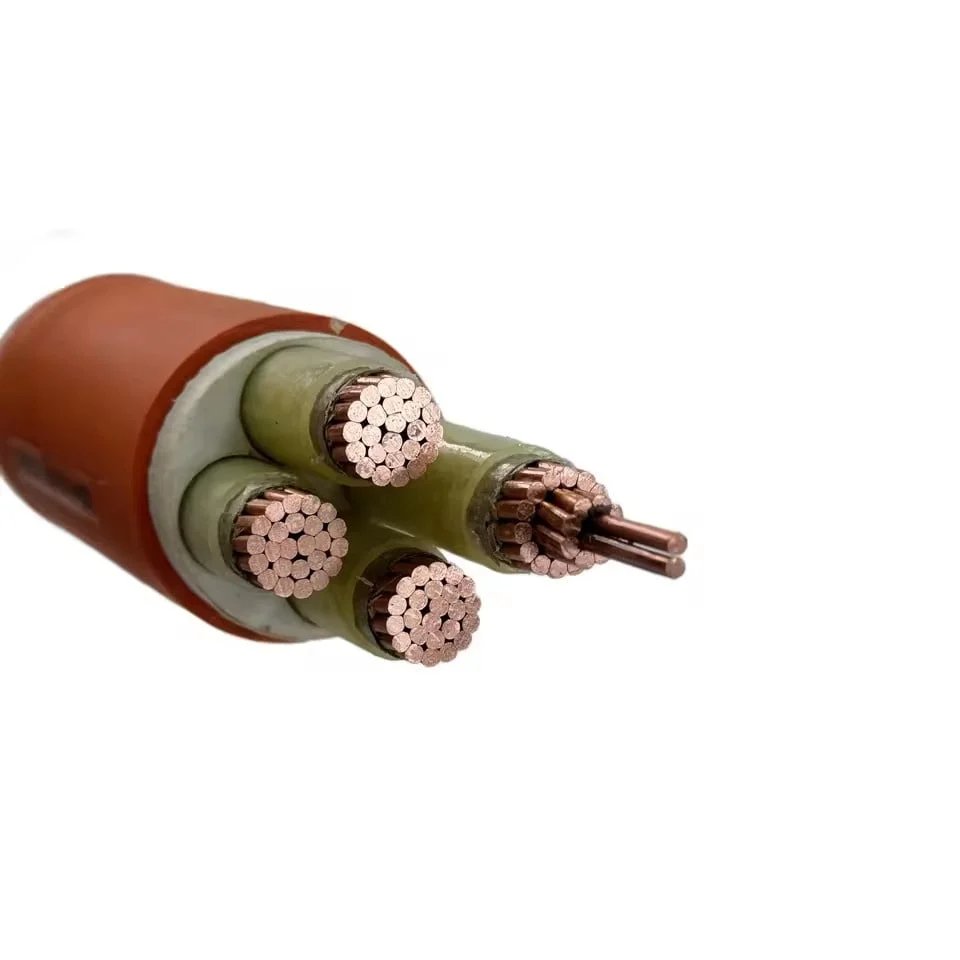
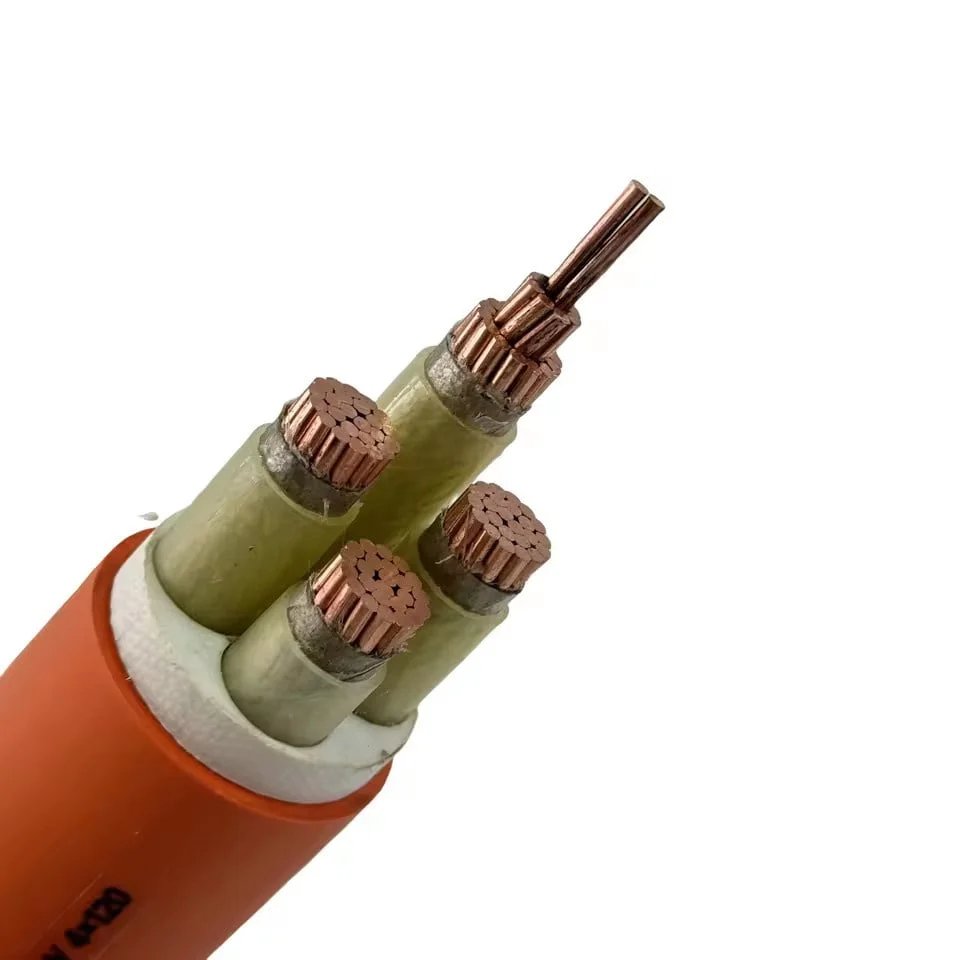
The construction differs from conventional cable in one critical respect: the insulation and fire-resistance layers are inorganic. Glass-fibre mica tape, mineral compound, and ceramic-forming compounds — materials that don’t soften, melt, or carbonise at the temperatures a real fire produces. The LSZH outer sheath burns away in the first few minutes of fire, but the inorganic core layers keep doing their job for the next three hours.
Conductor — Stranded Bare Copper
Compact-stranded bare annealed copper per IEC 60228: Class 1 (solid) for 6 mm² and below, Class 2 (stranded) for 10 mm² and above. Aluminum is not offered — aluminum’s 660°C melting point would defeat the cable’s fire-survival rating.
Insulation — Synthetic Mica Tape (multi-layer)
Two or more layers of synthetic mica tape (mica flakes on a glass-fibre carrier) wrapped helically around each conductor with overlap. Mica is the key inorganic insulator: it withstands 1000°C+ without breakdown, and its layered crystal structure self-seals along the fire front. Colour-separating layer is applied over the mica for core identification.
Filler & Binding Tape — Halogen-Free
An extruded mineral-compound layer (typically magnesium hydroxide based) is applied over the cabled cores. Under fire, the mineral compound releases bound water at around 300°C (endothermic, cooling effect) then forms a ceramic char that maintains the cable’s geometry and electrical isolation between cores. This is the layer that separates BBTRZ from conventional fire-resistant cable — it actively absorbs heat for the first critical minutes of fire exposure.
Wrapping — Glass-Fibre Tape (Inorganic Binding)
Glass-fibre wrapping tape over the mineral-compound layer holds the construction together and adds an additional inorganic barrier that survives the outer sheath burn-off. The construction below this point is essentially all-inorganic — carbon-based polymers are confined to the outer sheath only.Outer Sheath — Halogen-Free Low-Smoke Polyolefin (HFFR)
Extruded HFFR sheath — a polyolefin matrix (EVA or LLDPE base) loaded with aluminum hydroxide or magnesium hydroxide as the flame retardant. The metal hydroxides release water vapor when heated above 200°C, cooling the cable surface and diluting the combustible gases. Colour is typically green (per Chinese building code) or grey/black on request. The sheath is the cable’s only mechanical protection — for direct burial or armored applications, specify WDZ-YJY23 (steel tape armor) or WDZ-YJY33 (steel wire armor).
Key Features
Why BBTRZ Replaced BTTZ on Modern Fire-Safety Projects
BBTRZ is the modern flexible answer to the rigid BTTZ copper-tube mineral-insulated cable that dominated fire-safety installations for 80 years. It keeps the fire performance and adds practical installation benefits that cut project cost without compromising safety. The six features below are why specifiers switched.
950°C / 180 Minutes Circuit Integrity
Maintains rated voltage and continuous current at 950°C flame exposure for at least 180 minutes per GB/T 19216-2003 and IEC 60331. Twice the temperature and twice the duration of mica-tape XLPE cables (WDZN-YJY at 750°C / 90 min). This is the Class A fire-resistance rating required by Chinese fire codes for the most critical emergency circuits.
BS 6387 Category CWZ Compliant
The toughest international fire test: fire alone (Cat C, 950°C / 3 h), fire with water spray (Cat W), fire with mechanical shock (Cat Z) — all on the same cable sample. Replicates what actually happens in a building fire when sprinklers activate and structural elements fall on the cabling. BTTRZ (copper sheath variant) typically passes all three categories.
Flexible — Drum-Length Continuous Manufacture
Unlike rigid BTTZ which is limited to about 100 m per length (copper tube can’t be reeled), BBTRZ ships in standard 500 m or 1,000 m drums and can be installed using normal cable handling equipment. Fewer joints in the field mean fewer failure points and lower installation cost — the joints, not the cable, are usually where fire-survival circuits fail in practice.
Uses Standard Cable Accessories
Cable glands, lugs, and termination kits for BBTRZ are standard LV cable accessories with one additional step: a moisture seal at the mica-tape interface. No proprietary BTTZ-style mineral seals or specialist tooling required. Installation labour cost is roughly 40 to 60 percent lower than rigid BTTZ for the same circuit length.
LSZH Outer Sheath — Code-Compliant by Default
The outer sheath is halogen-free polyolefin, satisfying IEC 60754-1 (acid gas < 5 mg/g), IEC 60754-2 (pH ≥ 4.3), and IEC 61034 (smoke transmittance ≥ 60 percent). Same fire-safety properties as the WDZ-YJY LSZH family for the first few minutes of fire exposure, plus 3-hour circuit survival once the sheath has burned away.
Lower Weight, Lower Installed Cost vs BTTZ
BBTRZ weighs roughly 35 to 45 percent less than equivalent BTTZ (rigid copper tube MI cable) at the same cross-section, because the copper-tube sheath is replaced by mineral compound + LSZH. For a 1,000 m main fire-pump feeder, that’s tonnes of copper saved — a meaningful difference in both material cost and structural cable-tray loading.
How to Choose
Six Decisions Before You Place the Order
BBTRZ specification is driven by the fire-safety engineer’s circuit-criticality assessment, not the electrical designer’s load calculation. The cable is significantly more expensive than LSZH alternatives; the buyer needs to confirm it’s actually required before paying the premium. Walk through these six decisions before issuing the PO.
Confirm the circuit needs fire survival
BBTRZ is for circuits that MUST keep working during a fire: fire pumps, sprinkler controllers, smoke evacuation fans, emergency lighting in escape routes, fire alarm bus, fire-service lift power, ICU and operating room feeders, fire-fighter communication systems. For general building distribution that just needs to evacuate cleanly when ignited, WDZ-YJY (LSZH) at 25 to 40 percent of the cost is the correct specification.
Decide BBTRZ (mineral compound) vs BTTRZ (copper sheath)
The toughest international fire test: fire alone (Cat C, 950°C / 3 h), fire with water spray (Cat W), fire with mechanical shock (Cat Z) — all on the same cable sample. Replicates what actually happens in a building fire when sprinklers activate and structural elements fall on the cabling. BTTRZ (copper sheath variant) typically passes all three categories.
Confirm voltage class and core configuration
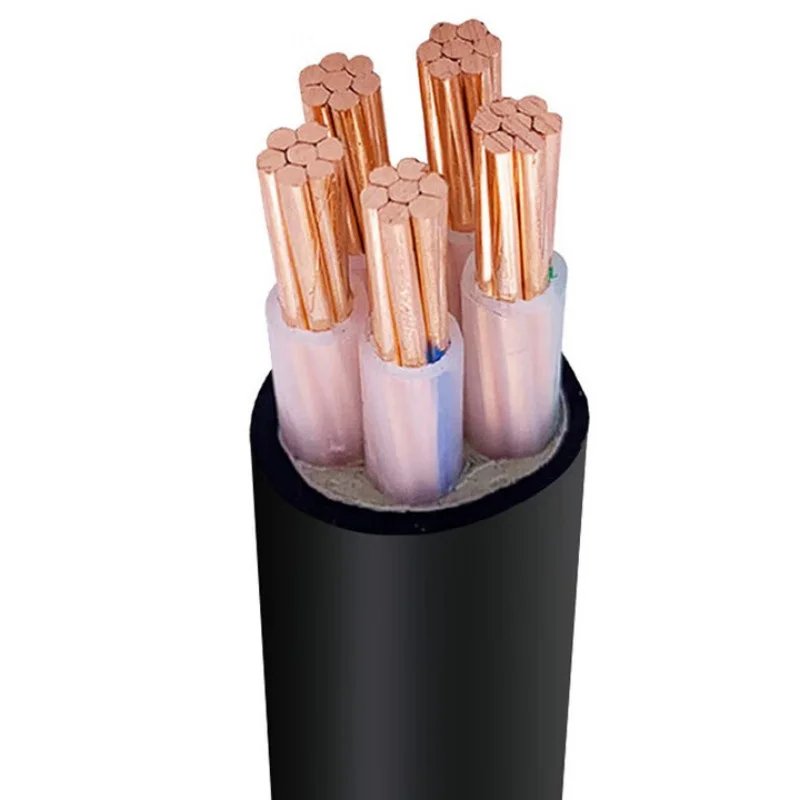
Standard offering is 0.6/1 kV — this covers virtually all building emergency circuits. MV grades (3.6/6 kV, 6/10 kV) are made on request for direct-from-substation fire pump supplies in larger sites. Cores: 1 to 5 cores standard; 3+1, 3+2, 4+1, 4+2 configurations common for circuits requiring dedicated PE. For DC fire-alarm buses, twisted-pair construction is available on quotation.
Size the cross-section with fire derating in mind
Cable glands, lugs, and termination kits for BBTRZ are standard LV cable accessories with one additional step: a moisture seal at the mica-tape interface. No proprietary BTTZ-style mineral seals or specialist tooling required. Installation labour cost is roughly 40 to 60 percent lower than rigid BTTZ for the same circuit length.
Specify the fire-test certification required
Chinese building projects typically require GB/T 19216 and GB 31247 Class B1 certification. International projects often add BS 6387 Category CWZ (fire + water + mechanical shock) and BS 8491 (larger-diameter cable fire test). EU projects need CPR (Construction Products Regulation) classification, typically Aca or B2ca. Specify which reports at order — some require third-party witness testing that adds 2 to 3 weeks of lead time.
Plan the cable route to maintain fire-survival
The cable’s fire rating only works end-to-end if the joints, terminations, and supports also survive the fire. Use fire-resistant cable trays where required (typically 2 hours in escape routes), fire-resistant cable glands at terminations, fire-rated penetration seals at every wall and floor crossing, and steel hangers rather than plastic (plastic hangers fail at 150°C, dropping the cable into the fire). The cable is one part of a fire-survival system — the route has to be designed for it.
التطبيقات
Circuits That Must Keep Running When Everything Else Burns
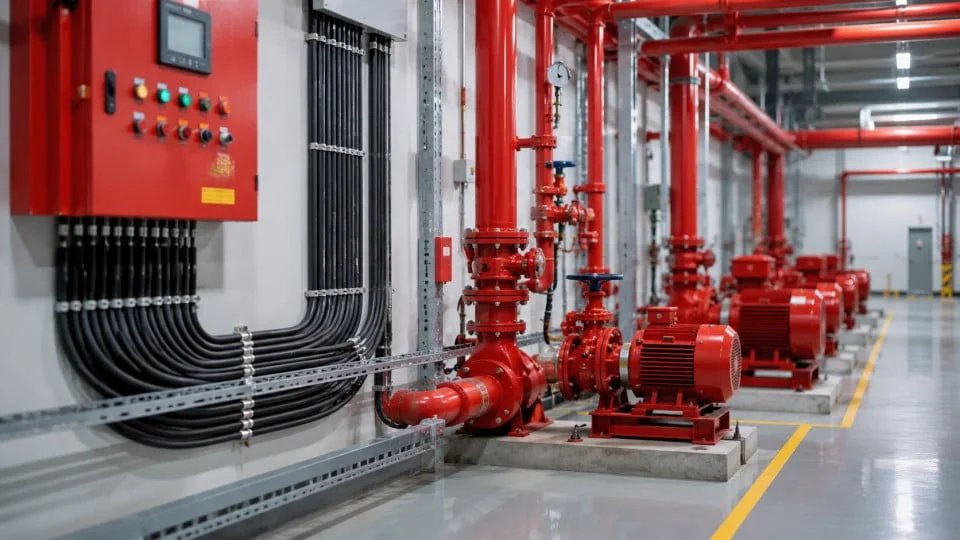
BBTRZ is specified for the small subset of building circuits where electrical failure during a fire means people die or fire spreads further. The four scenarios below are mandatory under most national fire codes; specify BBTRZ regardless of project budget pressure.
Fire Pumps & Sprinkler Controllers
Main fire pumps and jockey pumps that feed the sprinkler system. The cable from the building’s emergency switchboard to the pump motor must survive the same fire the sprinklers are fighting. Universally mandatory under all national fire codes for buildings with sprinkler systems.
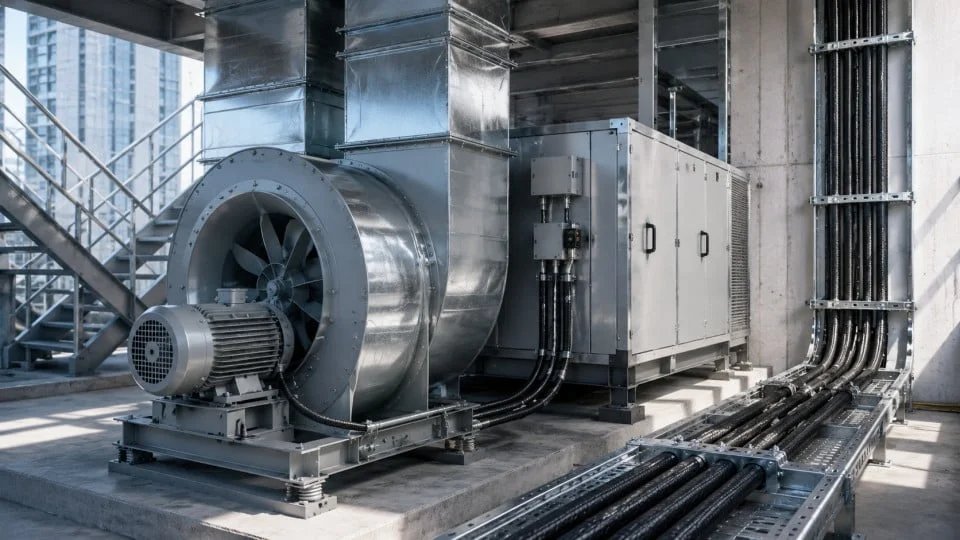
Smoke Evacuation & Stair Pressurisation Fans
Mechanical smoke evacuation fans that clear smoke from corridors and atria, plus stair-pressurisation fans that keep escape stairwells smoke-free. Both must continue running for the full duration of the fire. BBTRZ feeders from the emergency switchboard to the fan motor are mandatory in any high-rise building.
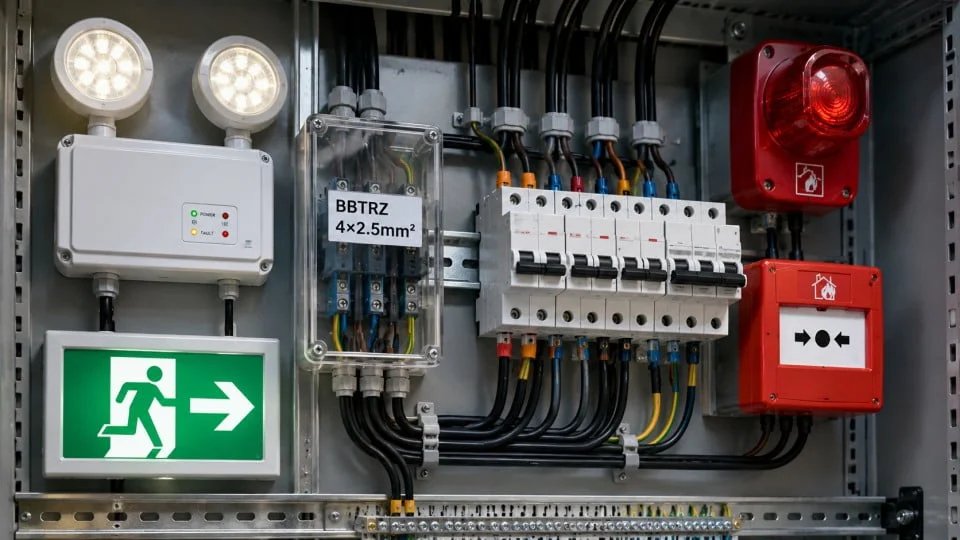
Emergency Lighting, Exit Signs, Fire Alarm Bus
Distribution circuits feeding emergency lighting fixtures, illuminated exit signs, and the fire-alarm system bus. BBTRZ small-cross-section (1.5 to 6 mm²) variants are the standard for these lower-current circuits, often run as a separate emergency riser parallel to the general lighting distribution.
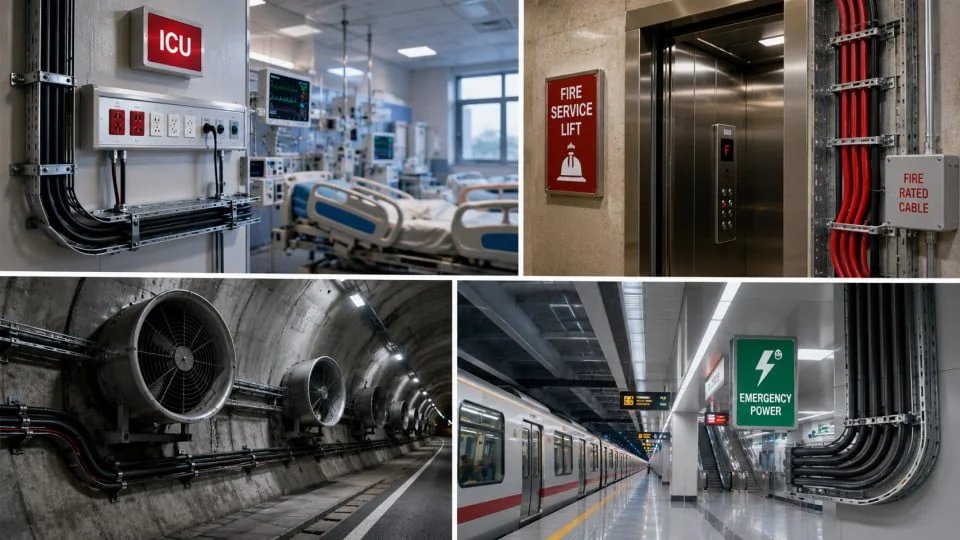
Fire-Service Lifts & ICU / OR Critical Loads
Power feeders to designated fire-service (firefighter) lifts that remain operational during a fire for fire-brigade use. Hospital ICU and operating-room supplies where unplanned outage during a fire would directly endanger patients. Tunnel ventilation, metro station emergency power, data-center emergency backbones.
Not appropriate for: General building distribution (use WDZ-YJY LSZH cable at 30 to 40 percent of the cost — BBTRZ is over-specified for circuits that just need to evacuate cleanly). High-voltage transmission (BBTRZ standard offering caps at 0.6/1 kV; MV variants are available on quotation but rare). Underground mine installations (use the MYJV family with MT 818 compliance and appropriate armor). Mobile machinery (use rubber-sheathed flexible cable instead).
Technical Data
Fire Performance vs Other Cable Types
Side-by-side comparison of BBTRZ against the cable types it competes with on fire-safety projects. The story is short: only BBTRZ and rigid BTTZ deliver 950°C / 180 min circuit integrity. WDZN-YJY (mica-tape XLPE) is a half-step solution at 750°C / 90 min. LSZH alone is not a fire-survival cable.
| Property | BBTRZ (this product) | BTTRZ (copper sheath) | BTTZ (rigid MI) | WDZN-YJY (LSZH+mica) |
|---|---|---|---|---|
| Circuit integrity test | 950°C / 180 min | 950°C / 180 min | 950°C / 180 min | 750°C / 90 min |
| BS 6387 categories | C only (typ.) | C + W + Z (typ.) | C + W + Z | C only |
| Insulation material | Synthetic mica tape | Synthetic mica tape | Magnesium oxide (MgO) powder | XLPE + mica tape under-layer |
| Sheath construction | Mineral compound + LSZH | Laser-welded Cu tape + LSZH | Drawn copper tube | HFFR polyolefin |
| Construction style | Flexible, drum-length | Flexible, drum-length | Rigid, ~100 m max per length | Flexible, drum-length |
| Moisture absorption risk | Low (mineral compound) | None (hermetic Cu) | High (MgO is hygroscopic) | None (organic polymers) |
| Weight (relative) | 1.00 (baseline) | 1.30 to 1.45 | 1.55 to 1.85 | 0.85 to 0.95 |
| Cost (relative) | 1.00 (baseline) | 1.50 to 1.80 | 1.80 to 2.20 | 0.45 to 0.55 |
| Suitable for fire pumps | Yes | Yes (premium) | Yes (legacy) | Marginal (90 min only) |
| Class A fire-resistance per GB 12666 | Yes | Yes | Yes | Class B (lower) |
Fire test methods: GB/T 19216-2003 / IEC 60331 (circuit integrity under flame); BS 6387 (Categories A/B/C for fire temperature, W for fire + water, Z for fire + mechanical shock); BS 8491 (large-diameter cable fire test). Test temperatures and durations are the minima specified by the standard — Jinda’s BBTRZ typically exceeds these by a comfortable margin. Specific batch results are issued with every shipment.
Electrical performance at normal ambient (DC resistance, ampacity, voltage drop) is comparable to standard XLPE cable at the same cross-section. Ampacity is slightly reduced (typically 5 to 10 percent) versus YJV because the mica-tape insulation has lower thermal conductivity than XLPE. Detailed ampacity tables and voltage-drop figures are supplied with the formal technical quotation.
Comparison
Three Fire-Survival Choices — What Each One Is For
The fire-survival cable market collapsed from the legacy BTTZ + LSZH duopoly into a four-way choice over the past 15 years. Where you sit on the cost-vs-environment axis decides which one you pick.
When to choose
Almost all building fire-survival circuits in dry indoor environments. Best balance of fire performance, installation friendliness, and cost.
When to choose
Coastal sites, chemical plants, tunnels with moisture exposure, lightning-prone locations, and projects requiring BS 6387 Category W (fire + water spray) performance.
| Attribute | BBTRZ | BTTRZ | BTTZ (rigid) | WDZN-YJY |
|---|---|---|---|---|
| Fire-survival rating | 950°C / 180 min | 950°C / 180 min | 950°C / 180 min | 750°C / 90 min |
| Continuous-length manufacture | Yes (drum-length) | Yes (drum-length) | No (~100 m max) | Yes (drum-length) |
| Standard accessories | Yes | Yes | No (specialist tools) | Yes |
| Hermetic moisture seal | No | Yes (Cu sheath) | Marginal (cut ends absorb) | No |
| Continuous metallic earth | No (separate PE) | Yes (Cu sheath) | Yes (Cu tube) | No (separate PE) |
| Cost (relative to BBTRZ) | 1.00 (baseline) | 1.50 to 1.80 | 1.80 to 2.20 | 0.45 to 0.55 |
For the 80 percent of fire-survival circuits in normal indoor building environments, BBTRZ is the right call — full Class A fire-resistance at meaningful cost savings versus BTTZ and BTTRZ. Spend the premium on BTTRZ only where the environmental conditions justify it. Consider WDZN-YJY only for code-compliant 90-minute fire-resistance requirements where BBTRZ’s 180-minute rating is over-specified.
Frequently Asked Questions
Common Questions From Fire-Safety Engineers and Buyers
Installation & Handling Tips
Six Practices That Preserve the 180-Minute Fire Rating in the Field
A factory fire test result of 180 minutes guarantees nothing if the installation defeats it. The cable is one component of a fire-survival system; the route, supports, joints, and penetration seals all have to perform too. The six items below are the most common installation mistakes that compromise fire-safety acceptance testing.
1
Use steel cable supports, never plastic
Plastic cable ties and plastic clamps fail at around 150°C — well before the fire test temperature, well before the cable’s rated survival temperature. Use galvanized steel cable ties, steel hangers, and steel-strap supports on all BBTRZ runs. The cable must remain on its intended route during the fire, not drop into the burning compartment below.
2
Use fire-resistant cable glands and junction boxes
Standard brass cable glands soften and lose grip around 350°C. Specify fire-rated glands (typically stainless steel body with refractory seal) tested to the same 950°C / 180-minute standard as the cable. Junction boxes for inline splices must be sheet-steel construction with refractory packing — plastic boxes fail in the first minute.
3
Seal cable penetrations with fire-rated material
Every wall and floor crossing must be sealed with a tested fire-stop system rated for the same fire-resistance period as the wall or floor (typically 2 hours for escape routes). The cable is rated to keep working, but if the penetration leaks smoke or flame, the building’s fire compartmentation fails regardless. Use intumescent putty, fire-rated foam, or mineral-wool stuffing depending on the wall construction.
4
Seal cut ends immediately and keep the cable dry
Mica tape and mineral-compound insulation are less hygroscopic than the MgO powder in classic BTTZ, but they’re not entirely moisture-proof. Cap cut ends with heat-shrink seals within 30 minutes of cutting; verify the factory end-cap is intact on arrival. Store drums under cover before installation. A wet cable will pass commissioning but degrade in service.
5
Minimize joints — pull continuous lengths where possible
BBTRZ’s biggest installation advantage over rigid BTTZ is continuous-length manufacture. Take advantage of it: tell us the run lengths at order, and we’ll spool drums to size so each circuit is one unbroken cable. In-line joints in fire-survival circuits are the most-failed components in post-installation testing — every joint avoided is a reliability improvement.
6
Test the installed circuit, not just the cable
Standard commissioning (insulation resistance, AC voltage withstand) verifies the cable is electrically sound. For fire-safety circuits, also verify the mechanical integrity of the support system: walk the route checking that every hanger, gland, junction box, and penetration seal is fire-rated and correctly installed. Photograph and document — the local fire authority will want evidence at handover.
Safety note: Fire-safety cable installation must follow the project’s fire engineering design and the applicable national fire codes (GB 50016 in China, BS 7671 + BS 9999 in the UK, NFPA 70 + NFPA 13 in the US, etc.). The cable’s fire-survival rating only translates to system-level fire-safety if the route, supports, accessories, and penetration seals are equally fire-rated and correctly installed. Acceptance testing by the local fire authority is the final check — coordinate with them during design, not just at handover.
Manufacturing Capability
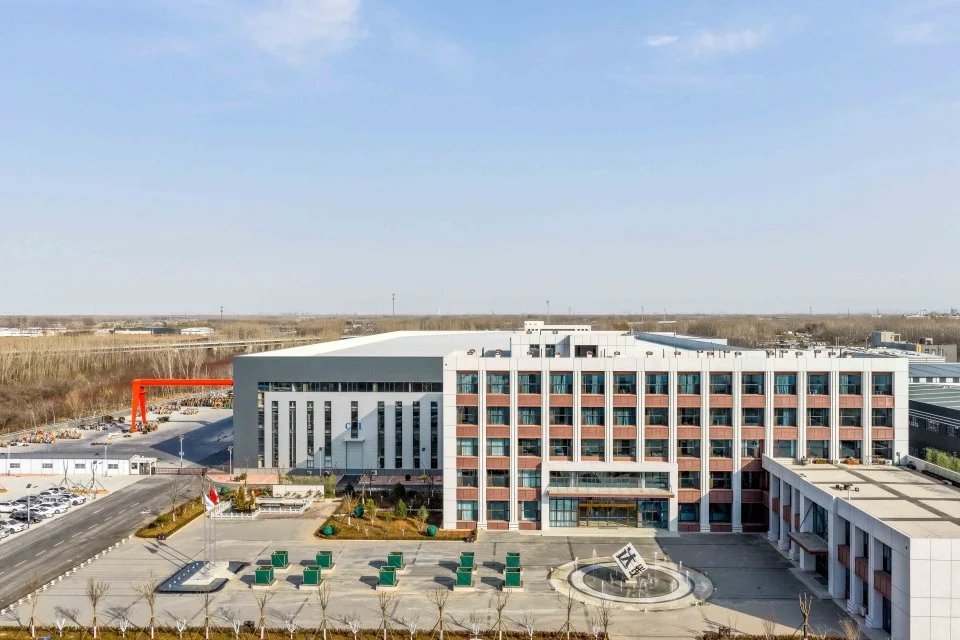
Why Source From sinopower Cable
Behind every drum we ship sits a 38-year track record, five production bases under one MES system, and a documentation discipline that gets cables through customs without delays.
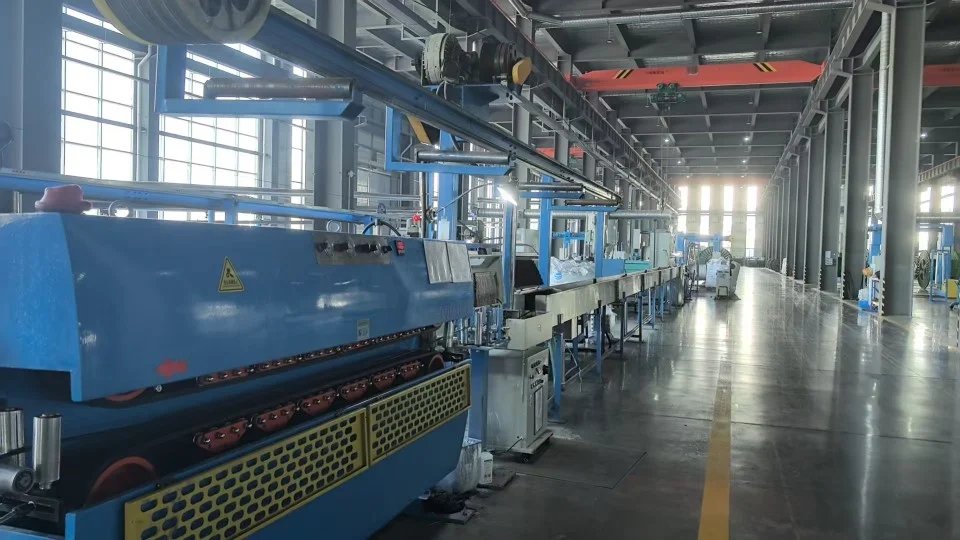
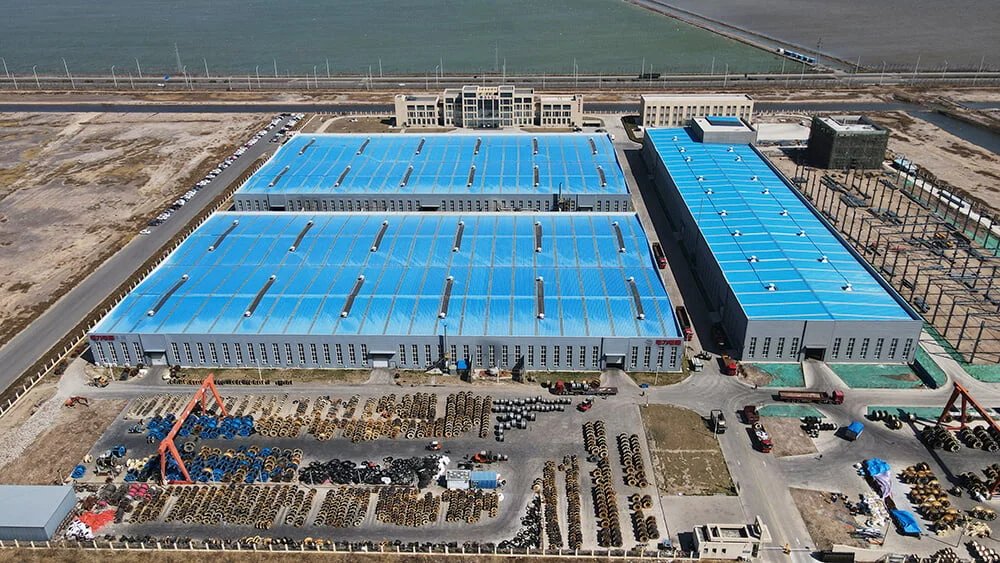
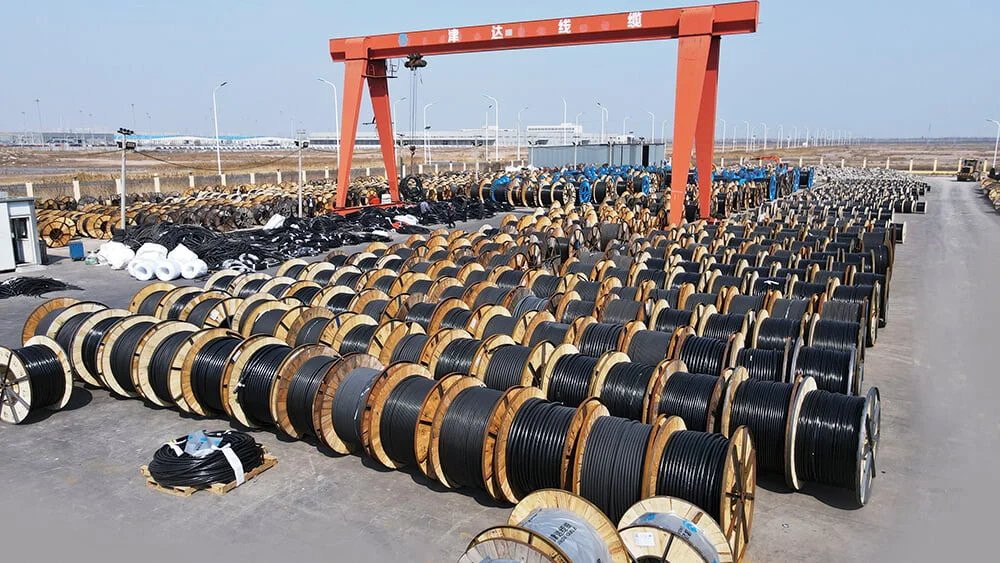
Every cable tested twice before shipping
Since 1987, our two-stage QC has been refined to a science: routine test on the production line, then full electrical and mechanical re-test before packing. Across 50+ export markets, our return rate stays under 0.3%.
Five production bases, 470,000 m², synced via MES
Tianjin, Liaoning, Heilongjiang, Shandong, and Xian — each base runs under one unified MES system. Same recipe, same protocols, same traceability, regardless of which plant ships your order.
3,000+ SKUs, custom configurations welcome
Standard sizes ship from inventory. Special voltage grades, color-coding, drum lengths, or armor configurations are routine — submit your spec and our team will quote the lead time honestly.
Trusted by EPC contractors in 50+ countries
We supply utilities, mining operators, port authorities, and large industrial OEMs across Europe, the Americas, Southeast Asia, the Middle East, and Africa.
Full paperwork shipped with every order
Every shipment includes factory test report, certificate of origin (COO), packing list, and bill of lading (B/L). Customer-nominated witness testing can be arranged before shipment.
Our Track Record
98.7%
On-time shipment rate (last 24 months)
< 0.3%
Return rate across export markets
25 days
Typical sea freight Tianjin → Rotterdam
100%
Shipments with routine test report attached
Logistics & Delivery
Packaging, Shipping & Documentation
What we handle on our side from production floor to the port of loading. Product-specific installation guidance is supplied with the datasheet that accompanies each order.
التغليف
- Wooden or steel drums per IEC 62004
- Coil packaging available for small cross-sections
- Standard drum lengths plus custom lengths on request
- Each drum labeled with type, voltage, cross-section, length, batch
- Waterproof wrapping for export shipments
- Cable ends sealed against moisture ingress
- Private-label / OEM packaging available under NDA
Shipping
- FCL / LCL sea freight, air freight on request
- Trade terms: EXW, FOB, CFR, CIF, DDP
- Ports of loading: Tianjin / Qingdao / Shanghai
- Typical sea freight to Rotterdam: 25 days
- Lead time confirmed at order acknowledgement
- Container loading photos sent before sailing
Documentation
- Factory routine test report (per applicable standard)
- Commercial invoice and packing list
- Certificate of origin (CO) — China Council, FORM A, FORM E available
- Bill of lading (B/L) — original or telex release
- Third-party inspection by SGS / BV / TÜV on request
- Customer-nominated witness testing arranged before shipment
Get in Touch
Request a Quote for Flexible Mineral Insulated Fire Resistant Cable
- Technical quotation with itemized FOB / CIF pricing
- Sample factory test report from a previous shipment
- Realistic lead time including raw-material procurement
- Direct contact with the assigned sales engineer
البريد الإلكتروني
info@sinopowercable.com
Response Time
Within 1 business day
Your message has been sent